

Yeah, About the Kids Vaping in School...
There are other things going on in schools other than phones...
Full disclosure - I wrote this because I wanted to learn more about vapes and organize it in my head. I’ll be writing about phones again soon, so I understand if you take a pass, but I encourage you to read on and see if you can find the connective tissue between vapes and phones.
This is not a compliment sandwich, but I am starting with the good news before I head into the bad.
Vaping among high school students is on the decline. In 2023, 10% of teens reported using an e-cigarette/vape, down from 14% the year before. However, vaping among middle school students ticked up slightly in the same time frame, from 3.3% in 2022 to 4.6% in 2023. And virtually no kids are doing the old-school smoking with combustible cigarettes.

That’s the good news.
…
I was allowing a minute for my teacher-readers to roll their eyes.
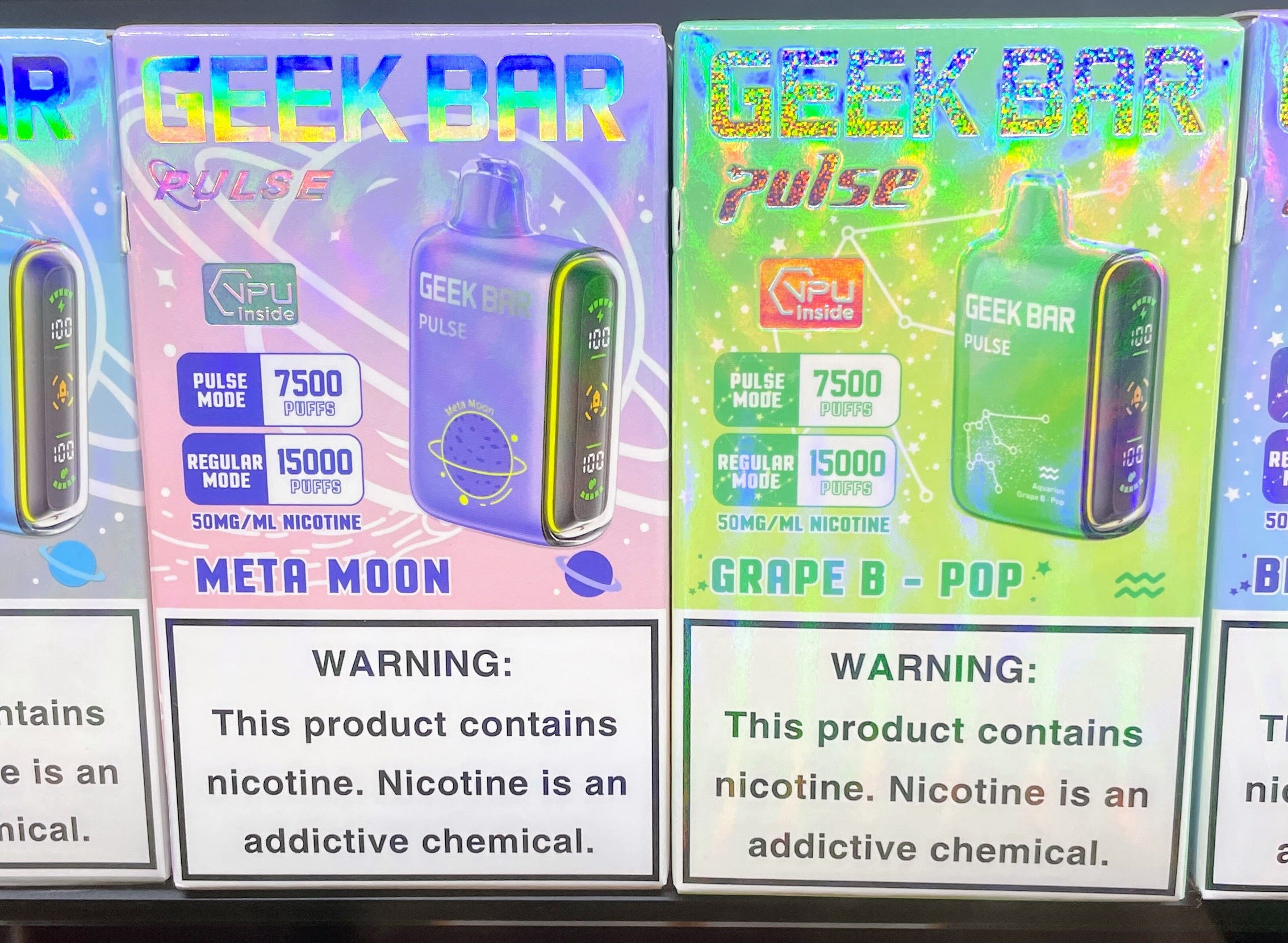
You see, vapes are a tenacious thing at secondary schools. That’s my wheelhouse, but they’re also a thing at middle and elementary schools—they have been for a while. And while the numbers are ticking down, 10% of high school students is still a lot.
If you’re a parent of a teenager or tween, you know about vapes, or at least you should. If your kid doesn’t vape, they’ve either been offered one by an acquaintance, know how to get one within a few hours, or can text someone on their phone and know what restroom to hit when to get one1.
I will say this a bunch, so let’s start early: teens don’t stand a chance.
How I Got Into It All
Despite the reported decline in the number of high schoolers using them, they’re still all over my school, and I know from other teachers that it’s also a massive problem in their schools. My administration vents about it at meetings. Heck, the person charged with building security for the district said they can do nothing to keep them out of the schools.
In my chemistry class, I have bi-weekly “discussion boards,” where I present my students with an article or video and ask questions. They’re topical, from ASAP Science’s “We Need to Talk About Diversity in Science” (four years old at this point, and unfortunately, still timely) to recent research involving chemistry and space science. In the last couple of years, I’ve included an assignment on the chemistry of tear gas with questions about how to put out a live C.S. gas cylinder and what to do (from a chemistry standpoint and why) if you get gassed2. Again, topical.
Also, in the last couple of years, I’ve included assignments on the chemistry of vaping, asking students to explain it to me. Questions I ask include the amount of nicotine in a vape, the true story of “popcorn lung,” long-term effects, and more. I don’t ask them to admit if they vape, but we have had discussions about what they learned from the assignment where students have chosen to talk about their personal experiences.
I’ve heard stories (sometimes funny) of almost getting caught, of how easy it is to find a plug3 (thanks in large part to social media), of how to sneak them by the metal detectors and bag searches, the best flavors, how (if you’ve got the skills) you can vape away during a class if you’re sitting in the back—pretty much all of it.
But one story, man…
When I asked if anyone wanted to share why they vaped, I had a student shatter my heart when they said (paraphrasing), “Maybe life is just so shitty that getting that little hit is the only thing that makes a day bearable.”
I spoke to their counselor, but I still worry about that student.
These discussions made me realize that I was one of the only teachers discussing vaping and its effects. I think vaping may gets mentioned in whatever passes for health class these days, but I’m not sure. Including it in other science classes would be a hard sell (I know—“But biology…” Yeah, that class is all about ensuring students do well on the EOC. There’s little room for add-ins, if at all).
I mean—it’s nowhere in my curriculum, and I feel it’s essential. But the idea that for many students, the only place they’re learning about vapes is if they happen to have me as a chemistry teacher?
That’s nuts. No one else is telling these kids not to vape?
There’s not even a poster up?
Vapes Nowadays
I’m writing primarily for myself and my age cohort now, so it would be great if you millennials and Gen Z folks could keep your giggles and jokes about old people to a minimum.
Juul isn’t a player at all anymore. An adult in a school is way more likely to have a Juul (or even remember what Juuls were) than a student. And while Juul made such an impact on popular culture that some people refer to vaping as “Juuling,” that’s just going to make you sound old if you call it that.
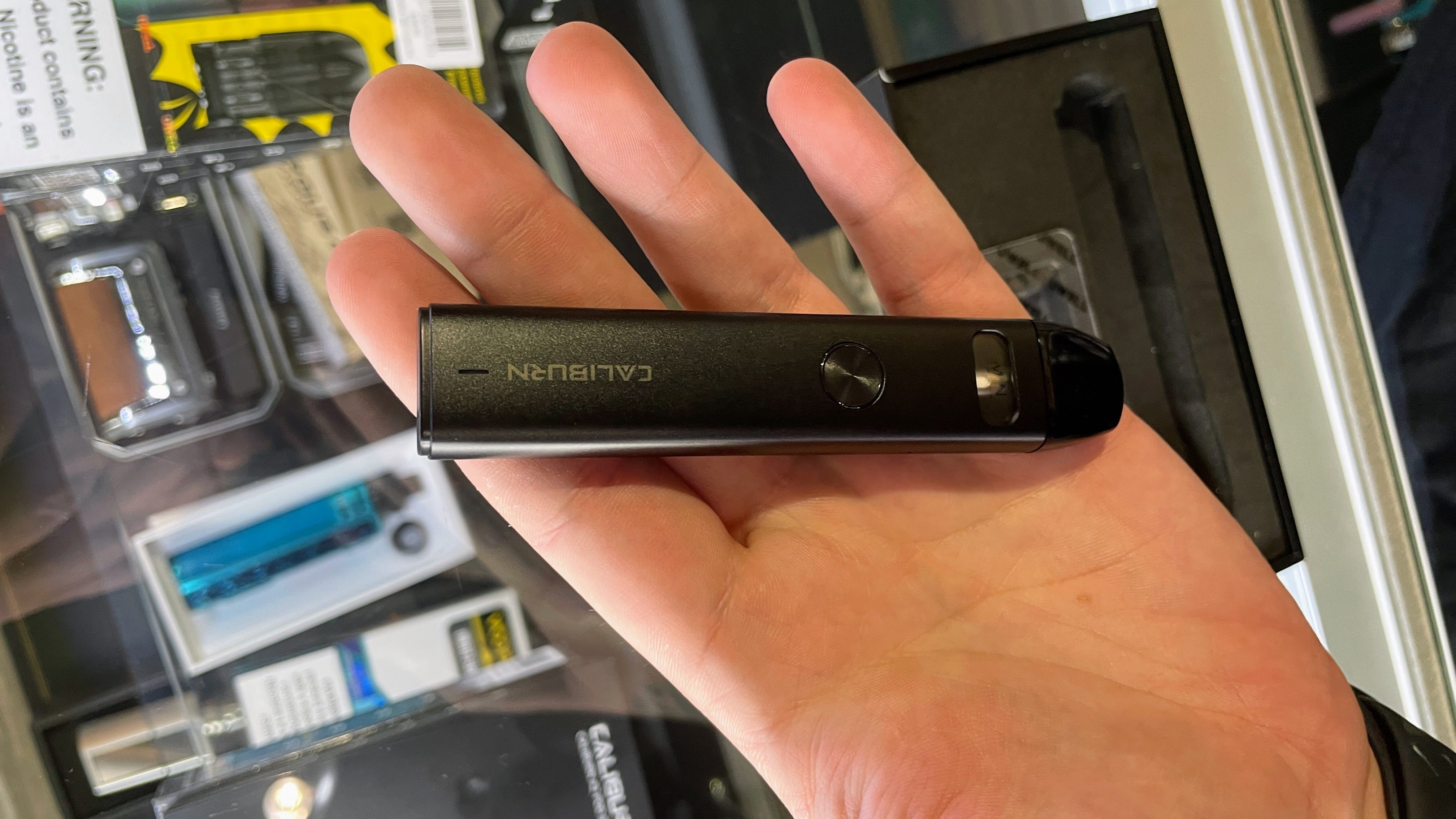
There’s no dominant brand anymore, although, over the years, disposable vapes like Puff Bar (Puff), Elf Bar, Geek Bar, Lost Mary, Esco Bar (okay, that’s a clever name), Razz Bar, Tyson 2.0 Iron Mike, and others will come and go as the FDA plays whack-a-mole with the manufacturers. It’s a losing game for the FDA, though. When the FDA hit iMiracle, the Chinese manufacturer of the formerly popular Elf Bar, the company stopped exporting Elf Bar to the United States. It replaced it with Lost Mary, the same product with a different name. These things are flooding in from China.

Reportedly, the FDA prioritizes brands that are popular with teens, but there are far too many types of vapes coming into the U.S. and far too few FDA agents. Speaking of the FDA, they have approved only around 26 vape-type products—all of them tobacco-flavored except one, which was menthol. The inclusion of that “flavored” product was controversial. The Agency mainly seeks to approve products that aid or improve public health4.
The FDA was slow to respond, so even though vape products had been on the market for years, the Administration’s ability to regulate them went into effect on August 8, 2016. That means that the FDA must approve any product produced after 2016, and starting in 2020, companies must request permission for their products to stay on the market.
Yeah, the companies aren’t doing that. The FDA is swamped.
That means that all of the flavored vapes you see in the vape store or at the gas station are illegal to be sold (unregulated nicotine delivery systems and all), but most often, they are not worth the time and trouble for local law enforcement to bother with.
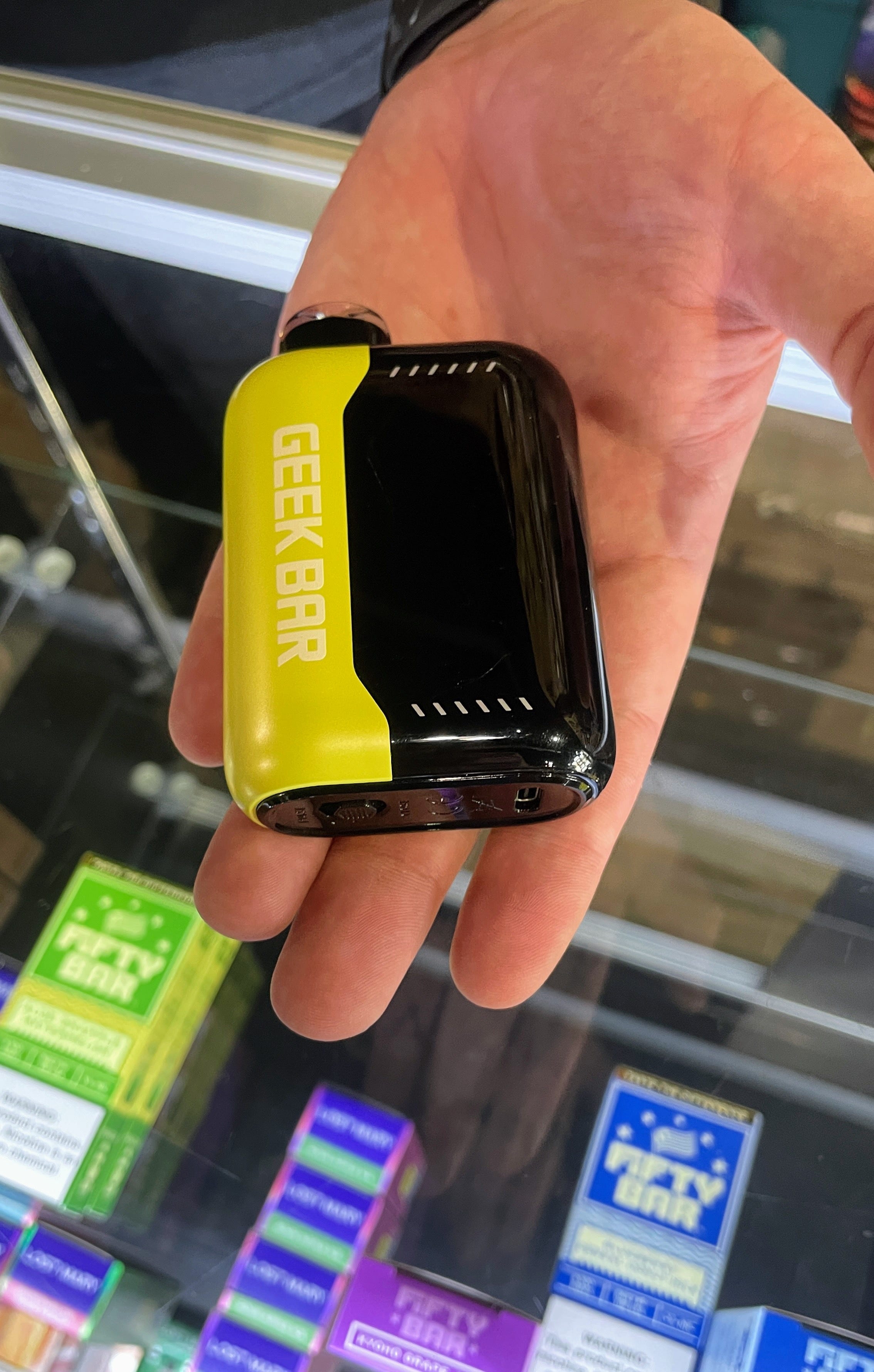
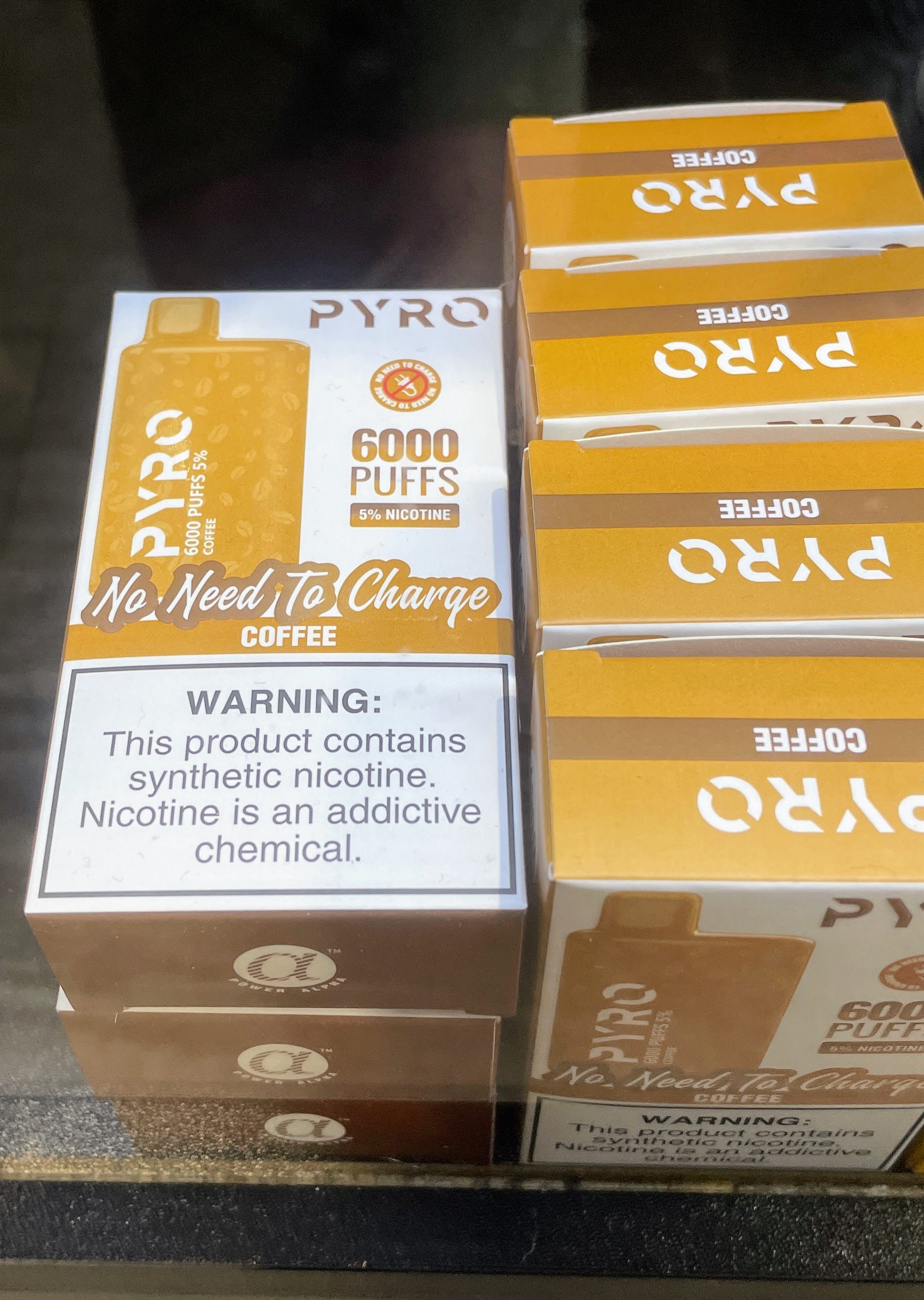
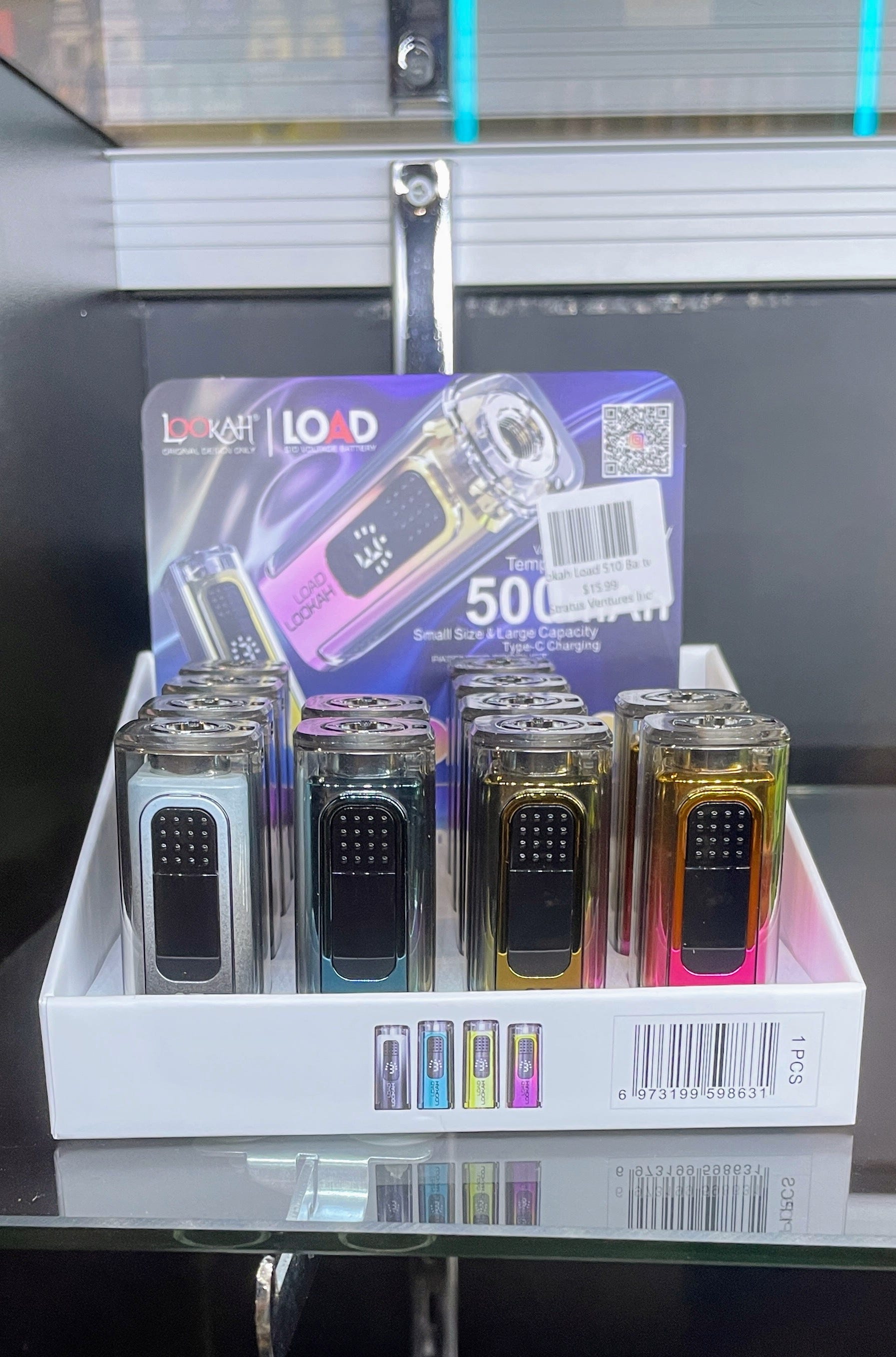
Those are just the disposables that retail for between $12 and $30. The nicotine load (and puff count, as seen on the labels) varies depending on the model.
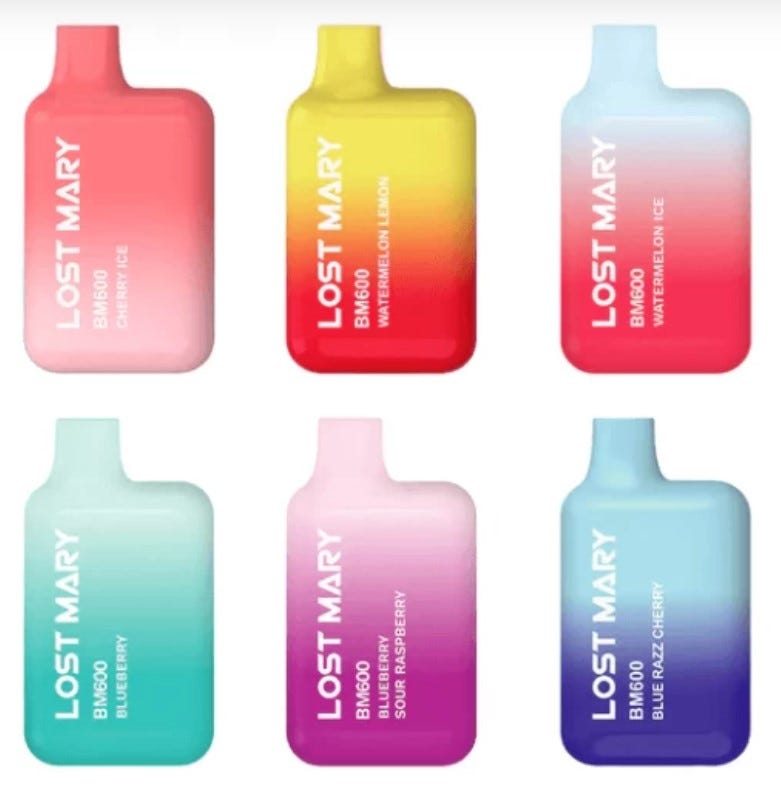
Refillable vapes such as UWell, Mi-Pod, and Novo Master use refillable pods (similar to the Juul model). Users can buy either pods or the juice to refill pods themselves. They’re more expensive than disposables and probably not what students carry to school.
But yeah - you see the door opening, don’t you?
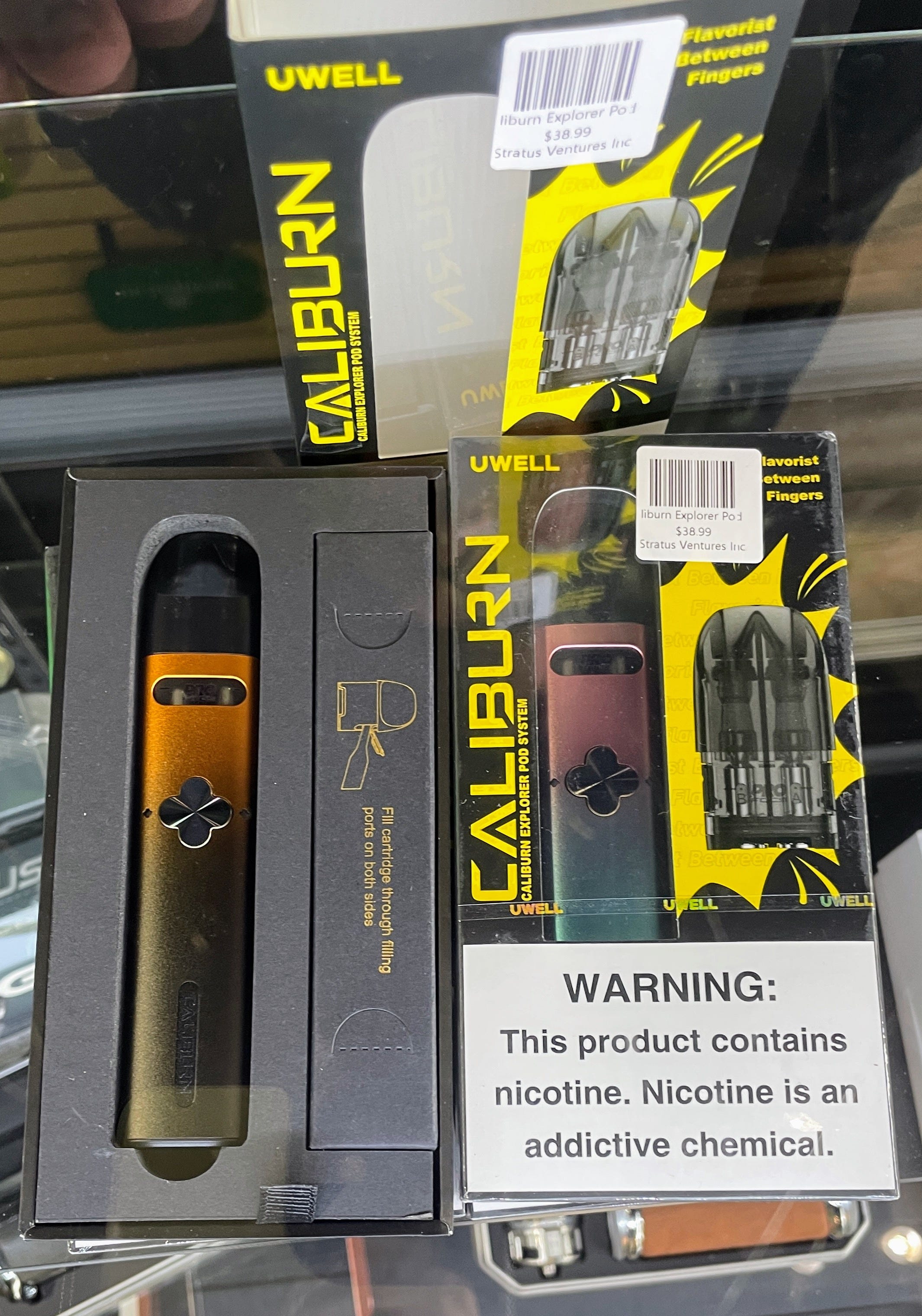
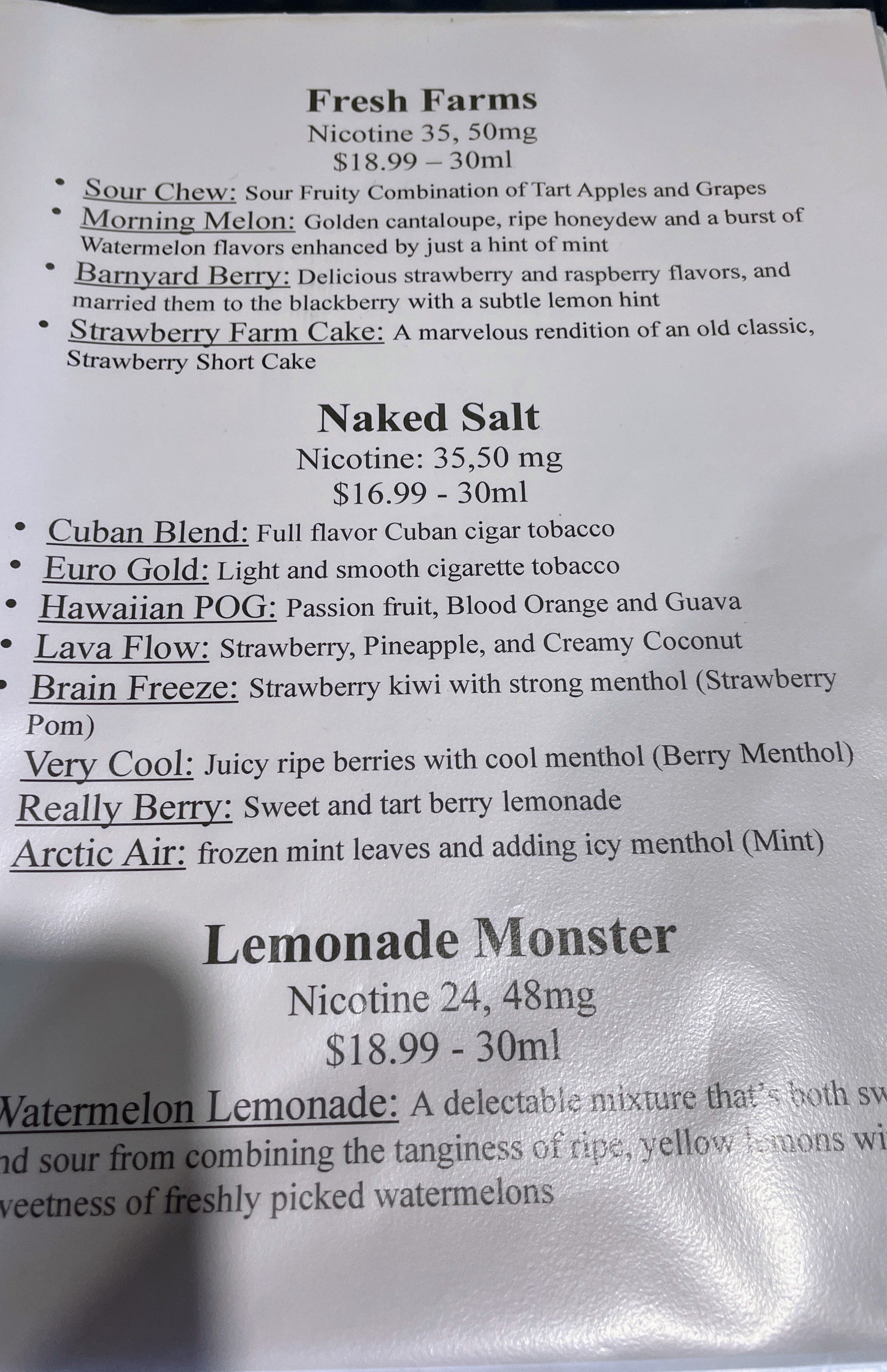
And then there’s the marijuana and THC vapes. Sometimes, they look different than their nicotine cousins, but most often, they look identical.
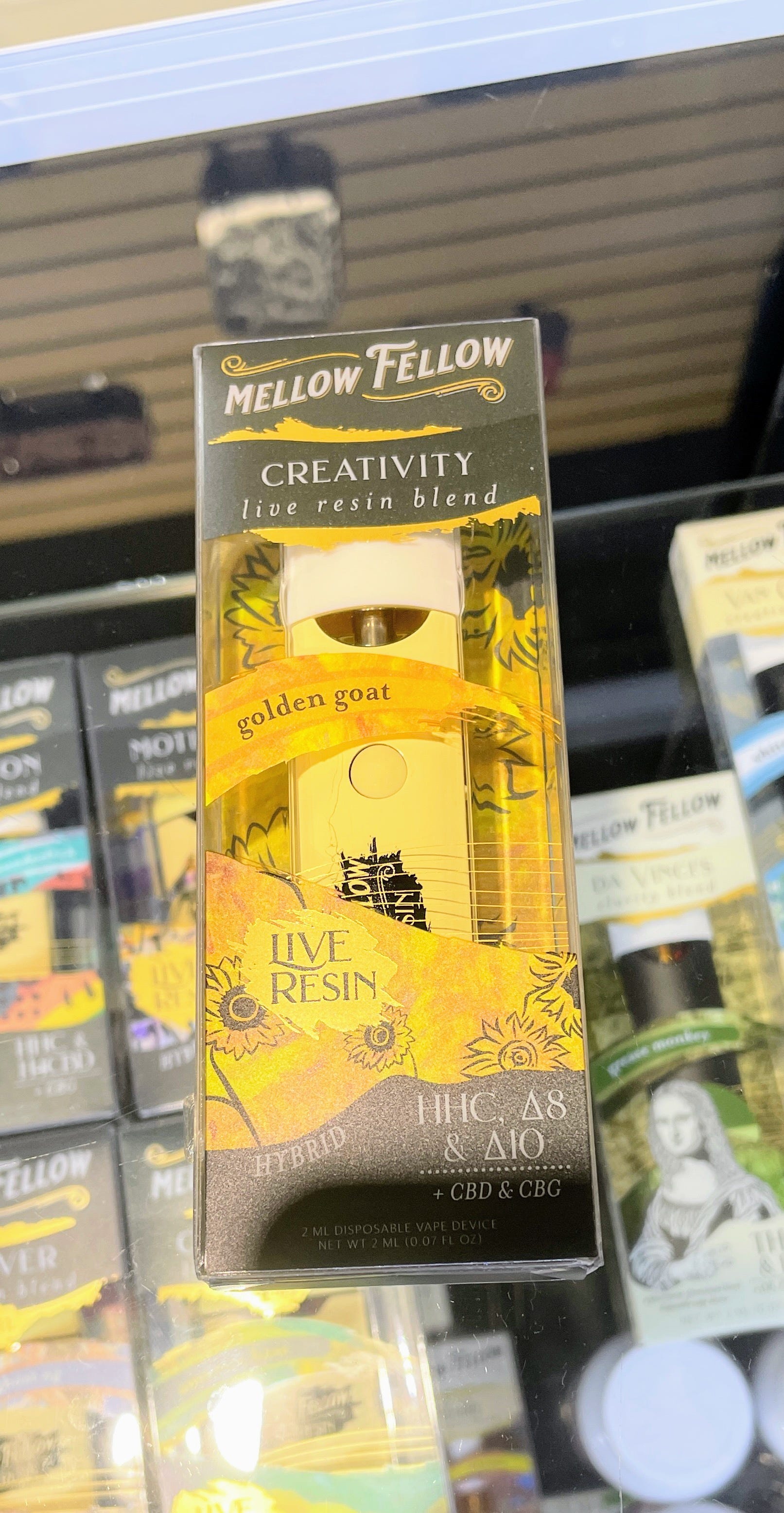
Of course, there are pods loaded with CBD/Delta 8 (legal in some states) and THC juice (not legal in many states). They tend to be brownish.
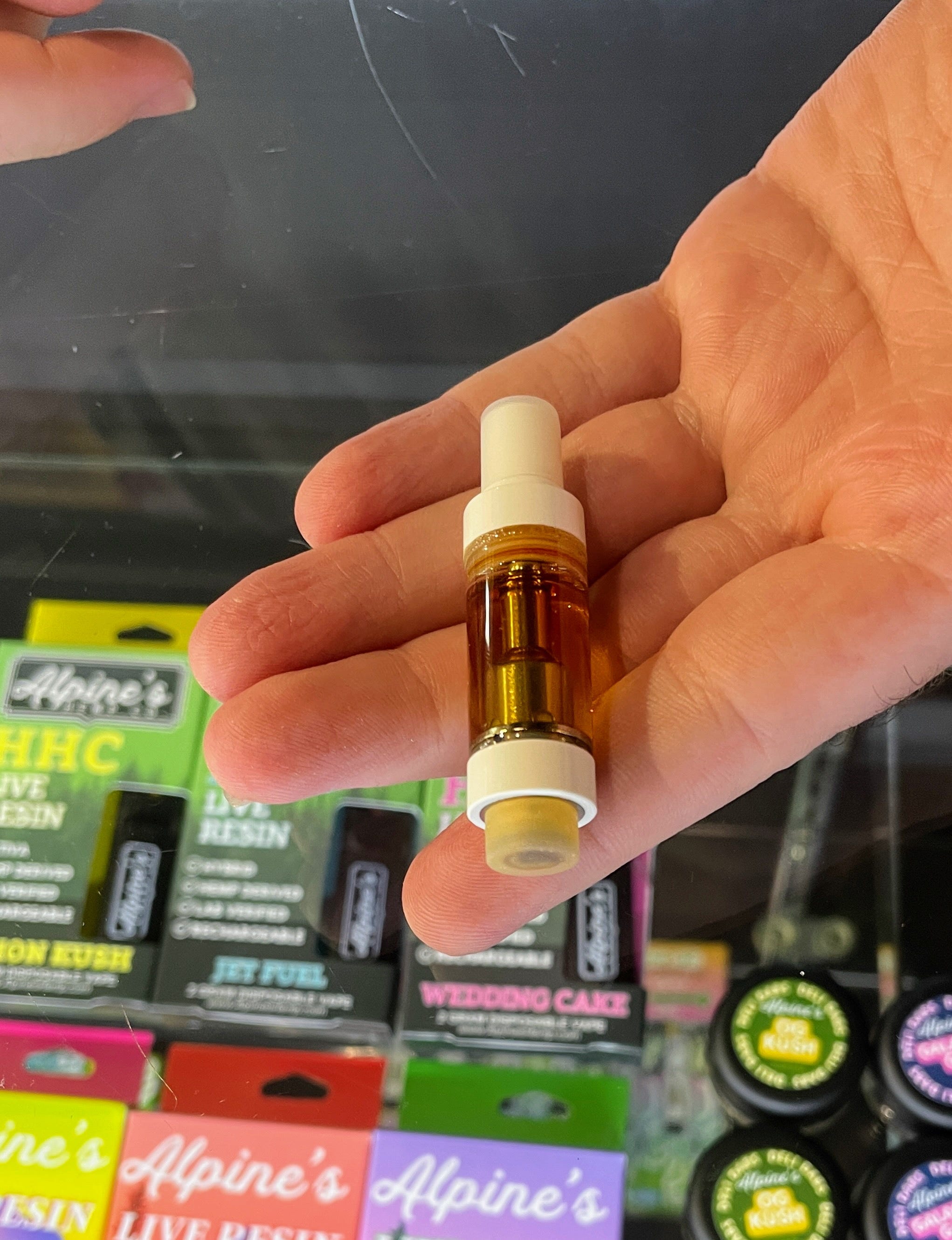
Oh, and check this out—this is the Lookah Bear. It’s a battery for vaping rigs that need a recharge. It recharges via USB.
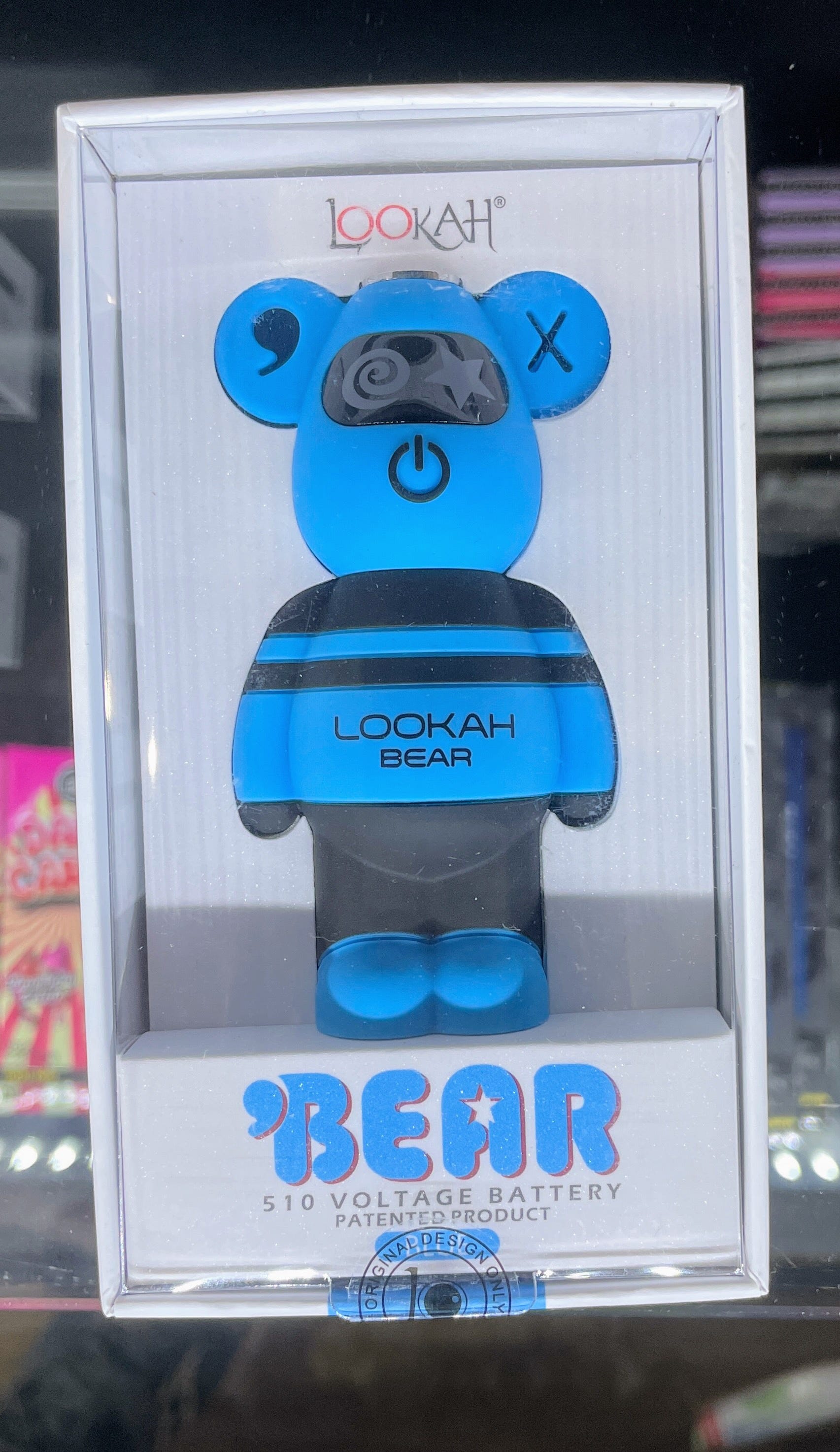
Oh, and while we’re talking about vapes in schools—the Hi-Light:
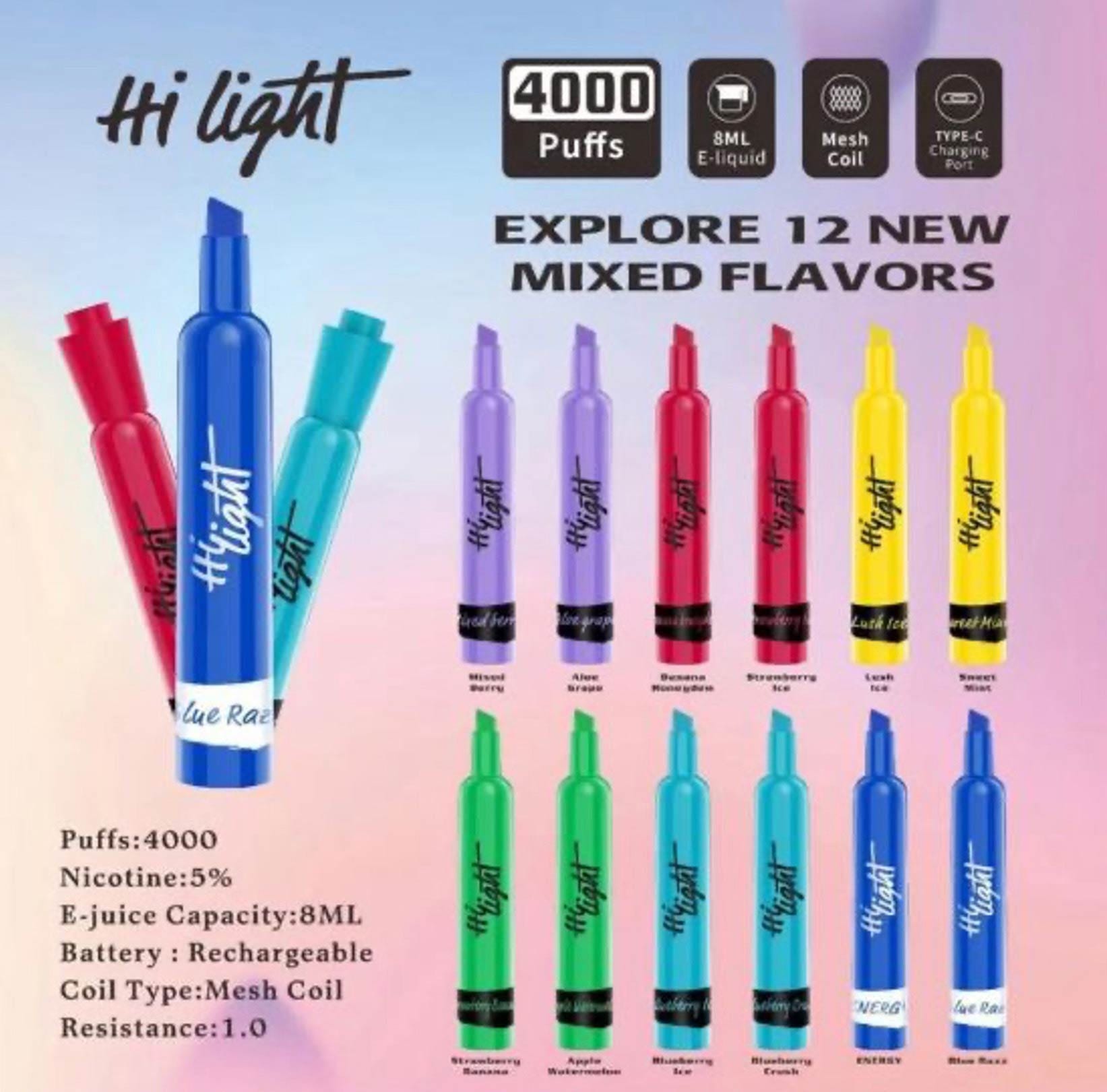
And this—the worst of the worst (for now)…the Penjamin.

How do I Know This?
I knew nothing about vapes other than they were a problem in my school. I realized if I were going to know what to look for and learn more about the subject, I’d have to do some research and eventually go to a vape shop.
And that’s what I did.
My guys at the shop were some of the coolest, friendliest people I’ve ever met. Once they learned I was a teacher who wanted to know more, they pulled everything out and explained it all. I wasn’t leaving until I knew all about it—and taking pictures to ensure I reported things correctly.
And they also wanted me to know they don’t sell to teens, and, as one employee proudly recounted, he once told an adult to “fuck off and get the fuck out of my store, you fucking asshole,” when he got suspicious at a bulk-sized purchase. He realized that the adult was buying for their kid and, more than likely, for their kid to resell.
It wasn’t the first time I’d heard about parents buying vapes for their kids.
As my guys (admittedly, this was a nice store5, not a sketch one) told me, they run a straight business and have no interest in selling to kids. As the owner explained, he’s trying to run a business in his community, not set up shop as a drug dealer. He even volunteered to come to the school and explain all the types of vapes or host an “open house” at the store for teachers to come by and learn about vapes6.
If you’ve got vapes at your school or you’ve got a kid, I’d recommend that you do the same thing I did. By and large (and yes, there are exceptions), vape shops would like to stay in business (and yes, their business is selling unregulated nicotine products) rather than have their products seized and shut down.
If you want to know about it, visit a shop. Ask questions.
Oh, and one anecdote—one of the guys working there told me that he smoked a lot in high school and got in trouble a lot as well. But that part—the getting in trouble didn’t want to make him quit. He was addicted to the nicotine in the cigarettes, and all the detentions and suspensions weren’t going to weaken its hold.
He vapes now and doesn’t smoke, but deep down, he told me he hates it. I asked him if he wanted to quit vaping. He said yes—he’s trying to cut back, but it’s complicated. His story is typical of a lot of young adults who started with cigarettes (or now, vapes) when they were younger—they want to quit but can’t.
Vape Problem #1: Who’s the Market?
The problem is/was in the marketing. Look at the pictures above. Yes, my shop doesn’t sell to teens, but with the designs and colors, who exactly are these products being marketed to? Vape marketing is a problem that goes way back to the O.G. vape.
Love them or hate them, Juul insists they were strictly a smoking-cessation product designed to get people off combustible cigarettes. Again, YMMV, but when Juul released its launch marketing campaign, “Vaporize,” in 2015 with an influencer-laden NYC party (with bowls filled with pods for the taking), it quickly caught on with teens. Yeah, no shit.


This was in the mid-2010s—the Big Tobacco fight was a recent, heated memory, and marketing that could appeal to kids reminded too many people of another kid-friendly marketing campaign…

According to Juul, when they realized teens were taking up their product in large numbers, they dropped the “Vaporized” campaign just as their sales started skyrocketing. Marketing of e-cigarettes and vapes has been relatively tame since, barely poking its head out from vape and smoke shops.

The thing is, if you’re going to make a pitch for Juul’s “innocence” in all of this (and it's a pretty fascinating corporate history), you can. Kinda7. The company was started by smokers who had seen the effects of smoking in their own lives. The original idea was to make a product to help people stop smoking, and by all accounts, it did.
But Juul was the first mega-popular vape brand, and therefore, caught hands from the FDA for all the nascent industry’s sins, real or perceived. After a while, the Juul v FDA was like a boxing match, where the boxer taking all the hits wasn’t fully getting up before another punch connected.
In the Wild West of vaping today, no company has adopted Juul’s mission or sense of corporate responsibility. Today, most vapes are manufactured to meet market demand, which is a fancy way of saying they exist to make their company money.
With names, flavors, and designs aimed directly at younger consumers.
Teens don’t stand a chance.
Vape Problem #2: What’s in them?
Good question. The FDA doesn’t check the contents of disposable vapes coming into the country (see above on # of vapes and # of agents). That puts them into the “unregulated” category or “I dunno.”
Aside from nicotine (more about that in a minute), disposable vapes and vape juice can have nothing at all harmful in them or a collection of chemicals that are anywhere from dubious to straight-up harmful.
The syndrome known as EVALI (E-cigarette or Vaping use-Associated Lung Injury) associated with cannabis-containing vape juice regionally. There was an outbreak and investigation in 2019, which, arguably, helped to take down Juul (the manufacturer was a convenient, if not arrogant, target). The leading cause of EVALI is thought to be vitamin E acetate used to cut cannabis oil (a thickener that’s brownish) in THC vape juice. While 2019-2020 looks to have been peak EVALI, cases persist today, many from adulterated THC vape juice.
Vape juice can also contain chemicals such as acetyl aldehyde, formaldehyde, and arsenic and metals like lead, chromium, aluminum, and tin. At the same time, the fog itself is propylene glycol and glycerine. None of these are good for the lungs.
There is no such thing as a non-toxic vape.
And that’s the lie of the name itself: “vape.” Chemistry teacher here, the stuff is an aerosol, not vapor. And it’s certainly not water vapor, like if you breathed in from your humidifier.
A vapor is a substance in its gaseous form—water vapor (steam), for example. But with a vape’s aerosol, you’re breathing in tiny particles, solid and liquid, suspended in a gas. Once in the lungs, those particles have to go somewhere, and the soft, vulnerable insides of your lungs are great landing pads.
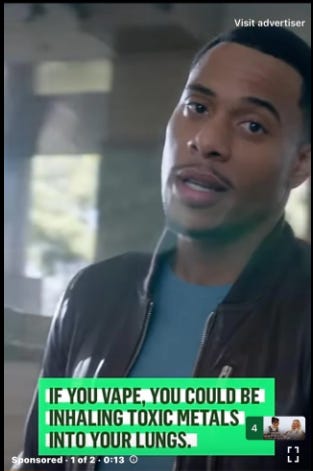
The anti-vape ads about “that’s metal…in your lungs” are laughable, but they have a point. The particles in the aerosol come out of suspension in your lungs. That’s how the nicotine and THC get into your bloodstream and body: crap on your lungs.
And vaping is associated with respiratory symptoms—wheezing, coughing, shortness of breath, and symptoms similar to bronchitis. As guest (and regular vaper) Nina Oyama said when she appeared on the Science Vs. Podcast episode on vaping8, she feels like she “always has a cold.”
That Nicotine Buzz…and Teen Brains
Vape proponents can argue that the other chemicals in vapes are largely safe (or at low enough levels not to raise analytical chemists’ eyebrows when they run them through a mass spec), the point of vaping is to get the nicotine. From the early days of e-cigarettes, the FDA has looked at the devices as “drug-delivery systems” because they are used to deliver nicotine to the user, albeit in a less toxic manner than combustible cigarettes.
Nicotine is a highly addictive substance that mimics the actions of acetylcholine in the brain, kicking off the reward pathway, which causes the brain to pump out a squirt of dopamine and prevent existing dopamine breakdown. It’s that last part that can reduce the sensations of stress and pain.
In terms of addictiveness, it’s in the top five list, which includes heroin, cocaine, barbiturates, and alcohol. Ask any smoker. If there’s an entire industry built around getting people to stop partaking in a particular vice (nicotine gum, patches, cessation programs, and vapes), that particular vice is hella addictive.
Teens don’t stand a chance.
Nicotine use in teens results in different responses than it does in adults. Where a hit of nicotine can help an adult to relax, it excites teen neurons. Other studies have implicated nicotine use in impulse control, problems with memory, attention, focus, mood regulation, and priming for future addiction9. These changes in teen brains aren’t temporary—they’re made as the teen brain is just about ready to come out of the oven of development. As a result, the structural and neurochemical changes in the brain get baked in for life.
One final thing on nicotine—like all drugs, its effects are dose-dependent. The more of the drug, the more response. One 5% vape pod typically has double the amount of nicotine as 20 cigarette pack. And the more they use, the more nicotine they need to get that pleasant buzzed feeling.
Teens don’t stand a chance.
So What Do We Do in Schools?
Being a teacher is a funny thing.
Not ha-ha.
You can have a meeting in the morning and be reminded that our students are still growing and developing, so we can’t count on them to make the best decisions (usually when it comes to something innocuous). That afternoon, you can hit another meeting and are told about a “bad” student who chose to misbehave or not follow the rules. They’re like L’il Criminal Masterminds.
What is it? Are their brains still developing and leading them astray, or are they actively choosing a life of crime?
Like many schools, our (and our district’s) approach is Catch and Punish—the same approach used with my dude and his cigarettes at the vape store a few years back.
Serious question - what is this supposed to accomplish?
We live in a world with easily accessible vapes, adults buying vapes for kids, and vape manufacturers marketing these things to kids directly. These things have a highly addictive substance in them. I’m not sure what the recidivism is in schools, but I’d bet it’s high.
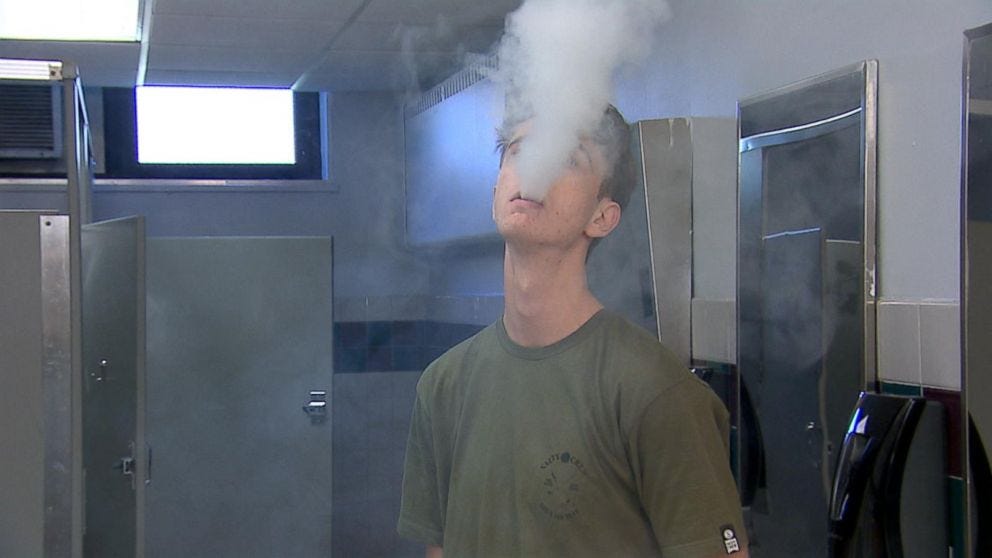
So what do we do when kids— who are reacting completely normally to the world and culture that we created and inserted them into, get caught vaping?
Like selling metal detectors to schools, vaping sensors have become a growth industry10. And just like metal detectors, your vape sensor salesperson will assure you they work, and you need to buy them11 —usually while they’re asking you to watch the gently swinging metal disk and focus on their voice. Just…focus…on…my…voice…
According to a 2019 Wired article (!), kids have known how to outsmart the detectors for five or more years. My favorite comment is when it reports that kids learn to flush toilets to create a vacuum and exhale over the bowl so no aerosols reach the detectors. “There’s no sensing that could ever change the laws of physics,” a company rep (who just admitted his product is a good doorstop) says.
Many admins with vape detectors report that the vapers are gone by the time they can reach the restroom or locker room that’s home to the detector. So, no Catch and Punish there.
In whose mind does this make sense? How is there a way out for kids hooked on one of the most addictive socially acceptable drugs that responded to a marketing campaign that had them dead in its sights? Punish harder? Punish more?
With no prevention, education, or assisted cessation program in place, what exactly are we doing here?
Look, you can manage students, or you can care about them. Management gets your compliance, and care gets you changed behaviors. They’re not mutually exclusive, but without concerted efforts to help get these kids off vapes (that would be an example of care), Catch and Punish looks like pure management. And it’s getting us nowhere.
Repeatedly.
What Should We Do in Schools?
I’m not saying that we don’t punish unacceptable behavior in schools. But this is a little bit more nuanced than skipping class. Let’s remember: 1) they are chemically addicted, and 2) marketing and peer pressure for those who vape are as equally irresistible as the pull of nicotine.
Along with Catch and Punish, adults trying to be cool about it doesn’t work. I mean, along with the “It’s like metal…in your lungs,” dude, read the comments below the Rick and Morty anti-vaping short from Adult Swim12.
Approaches that treat kids as dummies won’t work, and they can see through adult inauthenticity in a heartbeat. Crazy idea: educate the kids to help in prevention and cessation, but do it in a way where they don’t feel belittled or like they’re dumb. We, as adults, don’t like it when done to us13, but kids won’t notice it when we do it to them?
There are resources. I’ll list them in a minute. And that has to be critical. And we, as educators, have to be authentic in our delivery. Vapes can screw kids up for life. The brain science is there, and it’s easily accessible for us to grasp and explain to students. We have to have that communication.
But then, when you catch them vaping? Given the highwire act some kids are on regarding transcripts and college acceptance, not to mention military or other programs that want a clean record…we’re cool fucking with (or threatening to fuck with) that kid’s future because of an addiction that led to a stupid decision14?
Let’s look at what an Austin Independent School District in Texas is doing…
Got that? Instead of immediately shipping ‘em off to a different school (or worse), kids caught vaping are educated about it. And the school is seeing a reduction in vaping incidents compared to last school year. Crazy. Treat the kids with respect and demonstrate that you care about them, and you can get behaviors to change, even when the nicotine monster is involved.
And that’s the key. That care15. That education. I know, I know… “but who’s going to do this?” “where’s the money coming from?” “but catching and punishing is so easy and makes me feel all badass!” Yeah - some folks will throw up any barrier they can in front of actually helping kids. If you want to do it, if you see the need, if your heart responds to kids suffering through addiction, you find the path to get there. I’m not talking about hearts growing three sizes here.
Many of us in public education need other parts of our anatomy to grow three sizes.
Resources:
I’ve gone on far too long. One last thing—if you go with posters, remember that, generally, posters don’t work for kids. After a day, it’s furniture, and no one notices it. But if you go with posters, go with all Geico on it. How many ad campaigns does the insurance company have? All advertising the same thing, but all with a unique voice.
Okay - here we go:
Programs
American Lung Association: INDEPTH—An Alternative to Suspension or Citation
They say: “Intervention for Nicotine Dependence: Education, Prevention, Tobacco and Health (INDEPTH) is a new, convenient alternative to suspension or citation that helps schools and communities address the teen vaping problem in a more supportive way. Instead of solely focusing on punitive measures, INDEPTH is an interactive program that teaches students about nicotine dependence, establishing healthy alternatives and how to kick the unhealthy addiction that got them in trouble in the first place.”
Centers for Disease Control: Resources to Help Youth Reject or Quit Vaping
A collection of resources in and of itself, selections for youth to use themselves, for parents/caregivers, teachers/educators/coaches, health care providers, communities tribes and territories, and all audiences.
American Lung Association: Vape-Free Schools Initiative
They say: “Through our Vape-Free Schools Initiative, the American Lung Association is helping schools navigate this public health emergency with tools to protect and support both schools and students. Being recognized as a member of the American Lung Association Vape-Free Schools Initiative means that your school is a leader in supporting students affected by e-cigarettes, offering clear guidance, education and cesD.M.sion. With a toolkit of resources, we will help you share your efforts with students, parents, staff and community.”
Department of Health and Human Services: Vaping Precvention Resources
Offers resources for teachers (including classroom curriculum), students and parents. Focuses on moving through information in an “assignment” model to maintainP.D.ccountability.
Stanford Medicine: Healthy Futures Nicotine|Tobacco Prevention Toolkit
They say: “This program is geared for students who have been caught using e-cigarettes (or really any tobacco product) and/or for any students who are interested in trying to quit. This program is packed with a self-paced lesson, a group 2- or 4-hour teacher or counselor-led curriculum, quitting resources, and more! As a best practice, we would recommend that our curriculum be used as an educational opportunity in lieu of a suspension (alternative to suspension) for first time offenses, but if your policies/procedures require a student to be suspended (and those policies cannot be amended), we would strongly encourage you to provide our Healthy Futures intervention as an educational support in addition to the suspension.”
Print/Digital Assets:
Signs and Symptoms of Vaping Addiction: Tobacco Education Resource LIbrary (HHS)
Tobacco Education Resource Library (HHS) - digital assets, can be used digitally, printed, or ordered in some instances.
Standford Medicine—Tobacco Prevention Toolkit — The winner here is the Factsheet and Posters section, which has great infographics for download that explain the types of vapes available now, what to look for if you suspect vaping, and my favorite—a comparison of the amount of nicotine in vapes compared to cigarettes, below16.
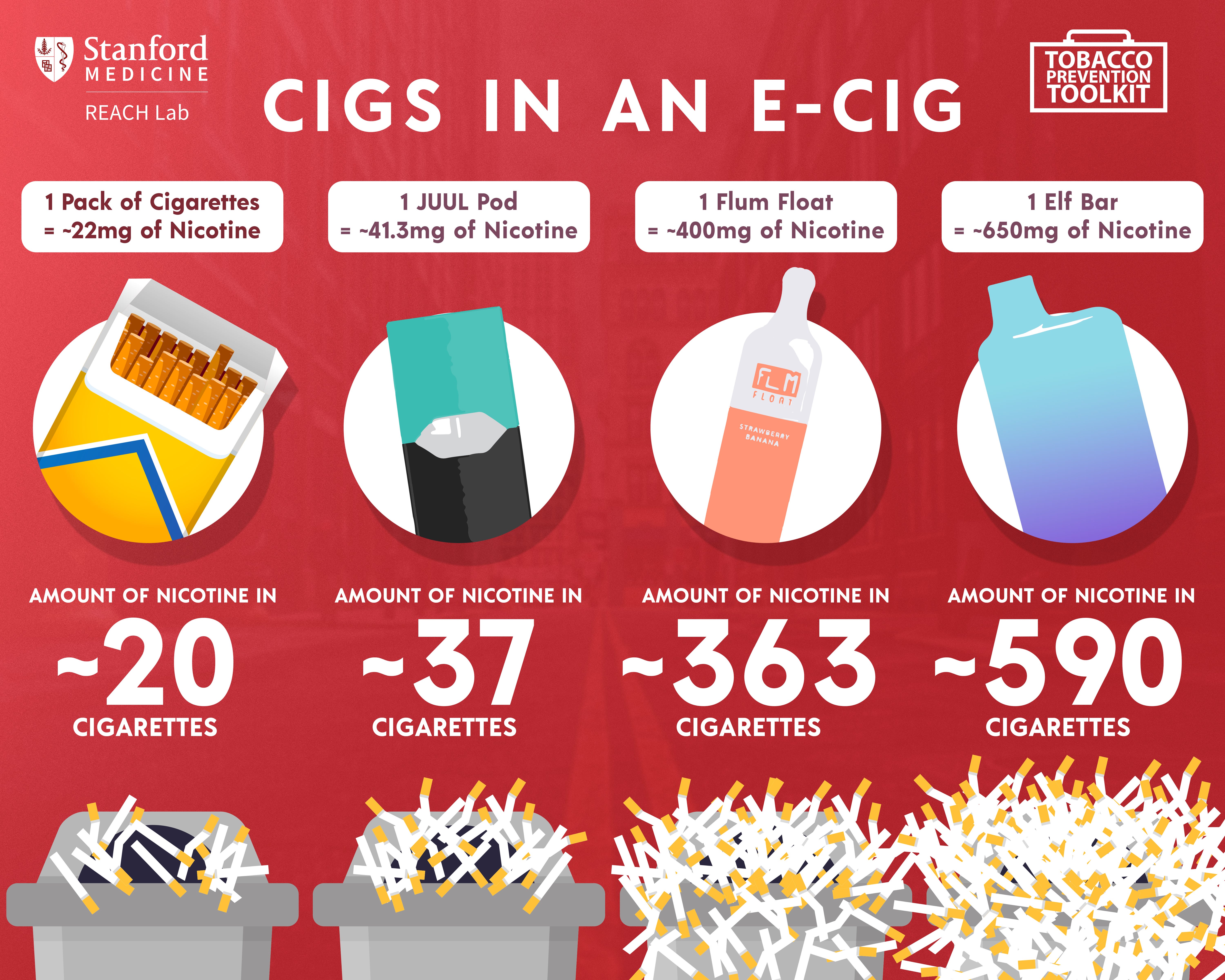
Most of the programs and just about all of the resources are free—there may be a requirement to train and register as a facilitator for a specific program, which I would hope districts would recognize as leadership or advocacy for the students in an official capacity.

We can all agree that something needs to be done. Catch and Punish doesn’t and will never work. But we know that. Still doing it, even when we know it—and know these kids are addicted to something that have limited (at best) control over is just…yeah, it’s something, all right.
We’re supposed to be helping these kids. Catch and Punish isn’t about helping.
Let’s help them instead. Because without us, teens don’t stand a chance.
I mean, there is a phone connection to vapes. So yeah. Phones.
I’m not getting political. I feel I’m being pragmatic.
“Plug” - many meanings, but for our discussion, a person who sells drugs. Here’s a mom telling you all about it.
Yes, fruit-flavored vapes do help adult smokers quit combustible cigarettes, and that’s good. Fun fact, though - alerted to the vaping problem in Barron’s school by Melania, former President Trump was horny to ban flavored vapes…until adult smokers who used flavored vapes to quit smoking cigarettes came to Washington and demonstrated. A lot was going on, so I don’t blame you for forgetting “We vape, we vote” in all that. The Trump Administration caved and flipped. Banning flavored vapes outright was not a political hill to die on. There were still hats to sell, after all.
They don’t sell Hi Lights or Penjamins. My guys are a class act.
They do offer a discount for teachers…
Not really; the founders still come off as massive douchenozzles in interviews.
As always, Wendy Zuckerman and her team do a phenomenal job with research, and the episode transcript has all the references used to produce the episode.
Or, you know, adding to their constellation of addictions, including their phones and, for some—online sports betting.
As soon as this goes live, I’ll probably get DMs from company reps wanting to talk about “solutions” their company offers.
Please write the check now; Gil’s got a mortgage.
Look, I wrote The Science of Rick and Morty, and while I appreciate the science in it (but those metals aren’t ferromagnetic), the whole vibe of that bit has me headdesking at its stupidity.
I’m looking at you, PD leaders, who use, “Clap once if you can hear me” to get the group’s attention. For god’s sake, Becky from Central, that’s what you use in elementary school.
See? Now I’m talking about them like they can make informed decisions. They can’t. They’re teenagers. Who are addicted to nicotine.
Yes, I’m a bleeding-heart liberal about many things in public education. Ask me what I think should be done with that 1.3 acres of otherwise farmable land reserved for Concussion Friday Night.
It’s also available as an animated gif! I know!