

Why You Should Become a Teacher
You won’t love it at first. You might grow to. And it might matter more than you think.
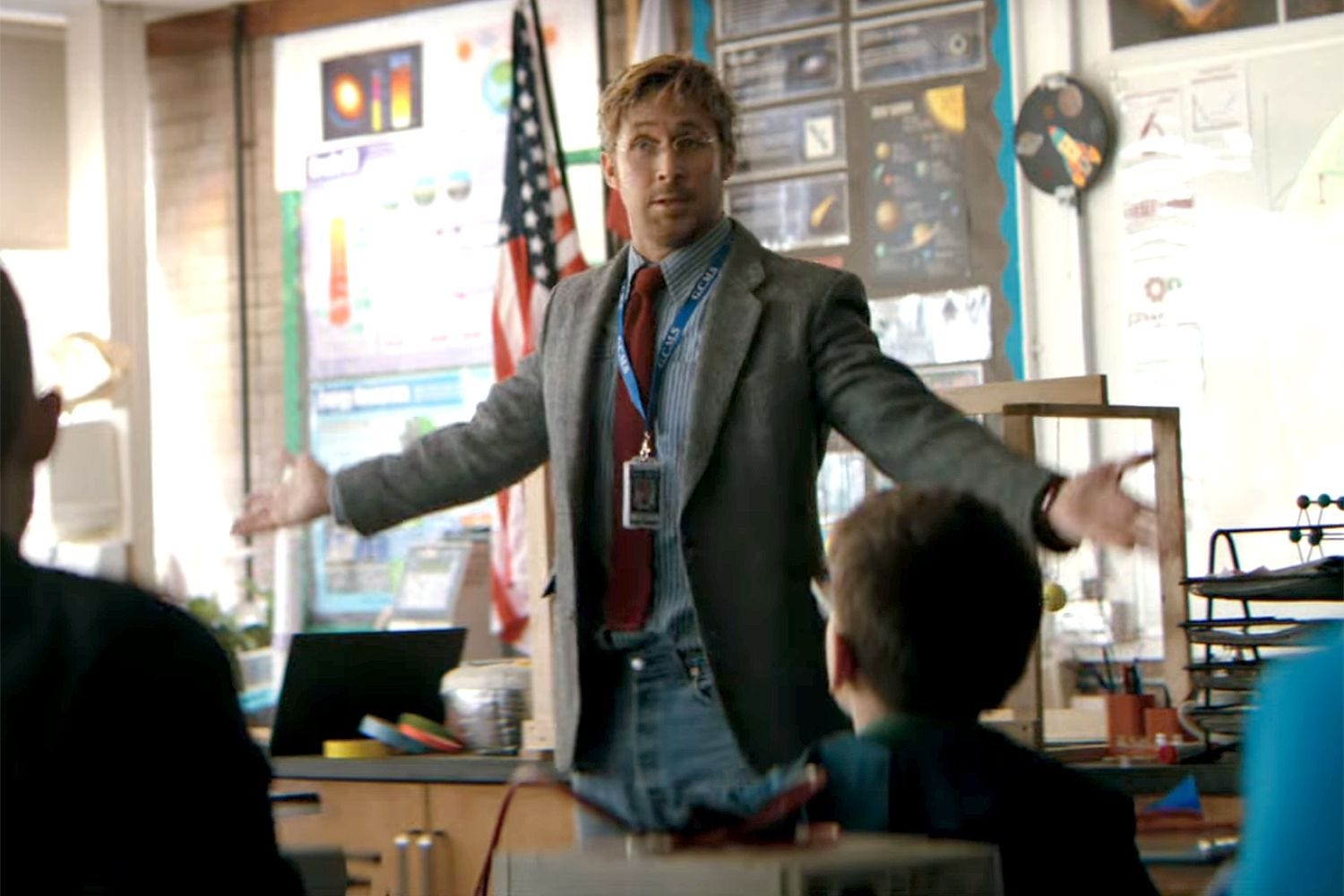
One of the lines I say most often in my classroom goes something like this:
“When you grow up and become a high school science teacher…”
I usually say it when I’m doing something a little strange. Or when a student asks why we’re learning something a certain way. Or when I’m explaining a decision that doesn’t quite fit what they expect school to look like—when they start to see what’s going on behind the curtain.
“When you grow up and become a high school science teacher,” I’ll say, “this will make sense.”
In the first few years, it was mostly a joke. The students would laugh. Someone would say, “Yeah, that’s not happening.” We’d move on.
But I’ve said it thousands of times now, to hundreds of students.
And somewhere along the way, it stopped being a joke.
Because most students have never seriously considered becoming teachers. And here I am, talking about it like it’s a completely normal future—like it’s something capable, curious people might reasonably grow up to do.
That line cracks the soil a little bit. It plants a seed.
And I mean it every time I say it.
You should seriously consider becoming a teacher.
Not as a fallback. Not as a backup plan.
As a first choice.
And if that sounds strange to you, that’s exactly why I’m writing this.
I Mean, Only If You Can Handle It
There’s another version of that line I use, too.
“If you call me up in ten years and say, ‘Mr. Brady, I just didn’t have it in me to be a teacher… so I became an astronaut,’ I’ll understand.”
Or a surgeon. Or an engineer. Or something equally demanding and precise—like a fireworks designer.
My students laugh because they know exactly what I’m doing.
The world treats teaching like the fallback plan—the thing you do if your other plans don’t work out.
“Those who can’t…teach.” And all that nonsense.
Yeah. That’s bullshit.
Teaching is the job you take if you’re willing to do one of the most cognitively demanding, emotionally complex jobs there is. Everything else is what you choose if you’d rather not deal with thirty kids at a time.
That’s not entirely a joke.
If you’re thinking about becoming a teacher—whether you’re still in school, halfway through an education program, or staring down a career change—you deserve something better than the recruitment-poster version of the job.
So here it is.
The job is hard. Fundamentally hard.
Not because kids are terrible. Not because the content is impossible. Or any one of the other million problems with education.
It’s hard because every class period is a live performance. You’re making decisions constantly—what to emphasize, what to skip, when to push, when to back off. You’re reading the room, adjusting on the fly, trying to keep thirty different minds moving in roughly the same direction.
It’s thinking, and feeling, and performing, all at once. It keeps your brain young, vital, and flexible.
It gives life meaning and prevents you from, as Seneca said, “dying before your time.”
Motion Comes Before Motivation
The part most teachers won’t tell you? You have to do the job—sometimes a lot—before you start to like it. You don’t get to wait until you feel good about this job to start. You have to move first.
If you’re looking for instant gratification, this is not the job for you. If you’re expecting to love it from day one—or even from day 181—you’re probably going to walk away before you ever get good at it. A lot of promising people do, and that sucks.
There’s an idea Arnold Schwarzenegger talks about: you don’t wait for motivation. You start moving, and motivation catches up to you. Teaching works the same way.
I run. Sometimes a lot. And there hasn’t been a run in years where the first twenty minutes felt like anything I would describe as fun. I start stiff. My breathing’s off. My legs feel like lead, constantly arguing that today would be a great day for a walk instead.
And then, somewhere along the way, it shifts. Not because I waited for motivation—but because I was already moving when it showed up.
That’s teaching.
You don’t fall in love with it at the beginning. You grow into it. The meaning comes after the motion—after you’ve been in the room long enough to develop instincts, after you’ve had enough small wins to start trusting yourself, after you figure out how to make the classroom feel like yours instead of someone else’s idea of what it should be.
I tell my students this when they get stuck on a problem: just get the wheels turning. Just start. The engine will catch, and you’ll find the way.
The same rule applies here. You’re probably not going to love this job at the beginning, and that’s okay. But that early resistance doesn’t tell you much about what the job will become. Neither do occasional bad days. The goal is to keep moving.
Everyone’s timeline is different, but most teachers who stay long enough to get good at this job end up loving it.
These Glasses Aren’t Rose Colored
I need to be crystal clear about something. This job is not perfect.
There are parts of it that are frustrating, exhausting, and at times, genuinely disheartening. The pay isn’t great, especially for what the job asks of you. Student behavior, if it’s not actively shaped and supported, can drift in the wrong direction. Social media has done real damage to kids’ attention, their confidence, and their ability to sit with difficulty—and we’ve been slow, as a culture, to push back on that.
You may find yourself working under administrators who don’t trust you, who manage out of insecurity instead of competence. You will have students dealing with things that are far bigger than anything happening in your classroom—mental health struggles, instability at home, pressure from every direction—and there will be days when you feel completely unequipped to help.
There will be days when you sit in your car and cry—before school, after school. Sometimes both.
There will be days on your way to work when you wonder what would happen if you didn’t take that turn to school—if you just kept going. I still have days where I fantasize about just continuing east in my drive to work, and three hours later, midway into the second period, I could be at the beach, where I could just sit and stare out across the ocean all day. It happens.
All of that is real, and you don’t have to pretend it isn’t.
And if you go looking for it, you’ll find it—day after day—and it will start to change you. You’ll get bitter. Cynical. Your colleagues will feel it. Your students will feel it. And before long, you’ll have built a version of this job that’s harder than it has to be.
Yes, there are real negatives. But none of that is the whole job. And none of it is a reason to walk away from the work itself.
Because inside all of that—mixed in with it, sometimes buried under it—is the actual job: helping a group of young people make a little more sense of the world than they could the day before. Watching a student who didn’t think they could do something—do it. Seeing understanding click into place. Seeing someone start to take themselves seriously in a way they hadn’t before.
The difficult moments aren’t constant. Yes, they’re real, and they matter—but they’re not evenly distributed.
So yes—the job is flawed. The system is imperfect. Some days are going to test your patience and your limits in ways you didn’t expect. You can acknowledge all of that without becoming cynical about the work itself.
You don’t stay because everything about the job is good. You stay because the part that matters is.
Loving It ≠ Martyrdom
What coming to love being a teacher does not mean is that you should grind yourself into the ground to prove that you care.
There’s a version of teaching culture that treats exhaustion like a badge of honor. Late nights. Endless grading. Sacrificing your time, your health, your relationships—because that’s what “good teachers” do. Sometimes that’s even given as an implicit expectation by administrators.
Bullshit.
That version burns people out—fast. And then the system replaces them in the blink of an eye.
You don’t prove you care by destroying yourself.
You prove you care by staying.
By building systems that let you do the job well without giving up everything else that makes you a functioning human being.
By protecting your energy so you can show up again tomorrow, and the day after that, and ten years from now when you’re actually good at this.
The job doesn’t need more exhausted teachers; it needs more teachers who last.
Teaching is not a sprint. It’s not even a marathon in the heroic sense.
It’s more like a long, steady practice. You show up. You get a little better. You figure things out. You adjust. You come back the next day, over and over again. 180 weekdays in a row.
There’s nothing noble about burning out in three years.
There’s nothing heroic about sacrificing your life outside the classroom to keep up appearances inside it.
That’s not commitment.
That’s unsustainable. That’s martyrdom for an uncaring system.
If a system only works because its people have to sacrifice themselves to keep it running, that’s not a system you should want to be part of—or one that will last.
The teachers who actually make a difference—the ones students remember, the ones who get good at this—are the ones who figure out how to do the job and keep themselves intact.
They don’t fit themselves to the job; they make the job fit them.
They don’t give everything.
They give what they can sustain.
And they keep going.
Kid, Teaching Will Break Your Heart
There’s another part of this job you need to know about: It will break your heart wide open.
Not every day. Not in some dramatic, movie-scene way, but often enough that you’ll feel it.
That’s the line you walk in this job.
You care about your students. You invest in them. You show up fully, day after day, and give them something real to work with. But at the same time, you come to understand—sometimes slowly, sometimes the hard way—that you are only one part of a much larger system of influences in their lives. You matter more than you probably realize. But you are not the whole story.
They have lives outside of school. Sometimes things in those lives go badly. Sometimes horribly. That’s reality.
And once you really accept that—once you stop trying to carry everything—the way you see the job begins to shift. Students stop looking like problems to solve or outcomes to manage, and start looking more like people in motion—people on their way somewhere, even if they don’t fully know where yet.
If you stay in teaching long enough, that shift becomes permanent. The students in front of you stop feeling like “your students” in the narrow sense, and start to feel more like people from the future passing briefly through your room.
They’re heading toward a world you won’t fully see—one that’s going to ask things of them we can’t completely predict.
For a few years, though, they’re here, and you get a small window to influence what they carry forward.
So you give them what you can.
Not everything—you can’t—but what you can. You help them learn how to think, how to question, how to recognize the difference between what’s true and what only sounds true. You give them tools that will still matter when the content itself has faded: how to read carefully, how to reason through a problem, how to treat other people like they matter.
Keeping the Faith
You don’t do this because you believe you can fix everything that’s coming.
You do it because they might be able to.
And at some point, if you stay in this job long enough, that stops being a comforting idea and starts becoming something much heavier. Much more real.
Because you begin to understand, in a way that’s hard to explain to anyone outside the work, that the future is not some abstract thing waiting out there for someone else to deal with. It’s sitting in front of you, thirty desks at a time, unfinished and uneven and full of possibility, carrying more than it knows how to hold.
And for a little while, it’s yours.
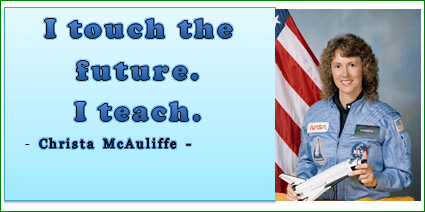
There’s a story about Skylab that I’ve always liked. When NASA launched it, they did so knowing that some of the means needed to sustain it didn’t yet exist. The technology wasn’t ready. The missions hadn’t been built. They were sending something into orbit, knowing the people who came after them would have to figure out the rest.
So they launched it anyway.
Not because they had all the answers, but because they believed that someone, later, would.
Teaching is an act of that same kind of faith.
Every year, you stand in front of a group of young people who are going to inherit problems you can’t fully see, let alone solve. And you give them what you can—how to think, how to question, how to hold onto truth when it’s inconvenient, how to work with people who are different from them, how to stay human in situations that make that difficult.
You don’t get to see most of what that turns into.
You don’t get to follow them far enough to watch the moment where something you taught them becomes the thing that helps them make a better decision, or build something that works, or choose not to make the world a little worse than it already is. But if you’re lucky, you do get to see it: the spark, the flash of who they’re going to be. The potential. The nobility. The person who’s coming, but is just a few years out.
And then you have to let them go before any of that comes to pass.
And then you do it again. The next year. And the year after that.
Not because you think it’s enough, but because it’s what you have.
And because, taken together—year after year, classroom after classroom—it might be.
Which is why I keep saying that line.
“When you grow up and become a high school science teacher…”
Sometimes the students laugh.
But I’m not entirely joking.
And every now and then, I catch a student looking at me and thoughtfully nodding.
Because if you’re paying attention—if you can see what’s actually sitting in front of you, and what it represents—it becomes hard to convince yourself there is more important work to be done.
And the future, whether it knows it or not, will need a few more people willing to do it.
Quick ask: If you’ve ever had a teacher who mattered to you—
what did they do that stuck?
I really love how you reframed teaching as a first choice. That shift matters, especially in a profession that has been so deeply deprofessionalized. Teaching was my first choice too, and after eight years in the classroom, I sometimes find myself pushing back against the feeling that I am only a teacher. I think that feeling comes from how limited our influence can seem outside our own classrooms, especially when it comes to policy.
That tension is part of why I write so much about what school is for and what this job actually requires. It’s incredibly complex, deeply strategic work, and I genuinely love it. I also believe it is teachers like us who will move the system forward from within, even with all its flaws.
I may borrow your line, with a small adjustment to make it my own: “when you become a high school English teacher…” Thanks for sharing your thoughts!
I once wrote a poem about my crush, when I was in 9th grade. I thought it was crap. But someone had passed that piece of paper around the class and somehow the teacher caught wind of it. She looked at it and said, "Krishna, come here."
I was confused because I did not sign the poem and it had no indication that I wrote it. I asked my teacher how did she know it was me.
She said, "There is only one student in the class who could have possibly written this."
That is when I realized that I can maybe write. And people might read.