

Reassurance Isn’t the Same Thing as Safety
On school violence, metal detectors, and what comes next
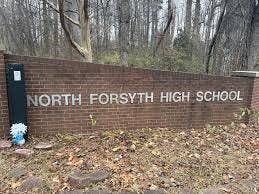
Note:
I wrote this in the days after a student in my district was killed at school. It isn’t an investigation, a policy proposal, or an attempt to assign blame. It’s one classroom teacher trying to describe what institutional response looks like from inside the building — what changes, what doesn’t, and what gets quietly absorbed in the process. Nothing here is meant to reduce the gravity of the loss or the complexity of the moment. It’s written with care, and with the belief that clarity still matters, especially now.
#local
A student in my district was stabbed to death with a knife at school last week — an act of violence in a place meant to be safe.
As a teacher, even writing that sentence feels unreal. Nothing I’m about to say makes it smaller, softer, or less horrifying. It happened during the school day, in full view of other students, and it was filmed on their phones. The fight that led to the death was over a vape. No charges were filed against the student who fatally stabbed the victim.
This was a tragedy. Full stop.
In the days since, conversations about school safety, metal detectors, and accountability have moved quickly. The loss itself has not had time to breathe.
What I want to talk about is what happened next.
Because before the facts could fully settle, the wagons started circling. Statements went out. “Thoughts and prayers” and other carefully worded expressions filled the air. Narratives began to harden. The machinery of institutional response spun up quickly and efficiently.
Naturally, without a word from teachers, even though educators on the front lines have shared powerful firsthand accounts of how safety protocols shape their daily reality.
Almost immediately, the familiar questions arrived. Why did the students have phones? Why were students out of class? Were metal detectors running that day? How did no one see or hear it? Why didn’t anyone in the bathroom get an adult instead of pulling out a phone and filming?
Those questions always land in the same place: what safeguard failed?
Metal detectors. Cameras. Locked doors. Hall passes. Phone bans. Zero-tolerance policies with fresh coats of paint.
This isn’t new. After every school tragedy, we reach for the same levers and pull harder. We add another layer of screening, another checkpoint, another protocol meant to catch the next thing before it happens. Schools weren’t designed as hardened targets. We became that slowly, one incident at a time.
And once you start down that road, it only ever goes in one direction.
The History of Safety Screening
When they started a couple of years ago, we were told that safety screenings with metal detectors and wands were “just where we are now.”
I don’t even remember which tragedy prompted the shift. That’s part of the problem. There’s always a reason, and it’s always framed the same way: a reaction, not a plan.
“Training” consisted of a short video — district staff LARPing procedures — a few minutes for questions, and a schedule adjustment that told teachers to absorb the disruption into the instructional day.
That detail matters, so I don’t want it to slide by.
The screenings and metal detectors are run by teachers.
Not security professionals. Not trained staff hired for this purpose. Teachers.
The more cynical among us joke that “TSA agent” has been added to the long list of non-teaching duties, alongside hall monitor, phone police, dress-code enforcement, therapist, referee, parental stand-in, child advocate, and whatever else the day requires.
But the comparison isn’t really fair.
To TSA agents.
TSA agents receive at least 120 hours of training and are provided with equipment designed for the job. Teachers were handed wands, metal detectors, and an expectation that we would figure it out on the fly — while also doing the jobs we were actually hired to do.
Ask the student to open the bag. Look inside. Move things around. Keep the line moving. Instructional minutes are ticking away. Hopefully, the weather cooperates because the line stretches out the door.
Questions about gaps in the plan were met with variations of the same answer: this is what we were told to do.
Teachers assigned to morning entry points were expected to arrive well before their contracted report time. Those assigned during the day had to give up planning periods. The schedule rotated. The responsibility stuck.
Not long after, “random” safe-entry screenings began.
Over time, the training evaporated. Staffing thinned. Fewer people were asked to cover the same ground.
For anyone who works in public education, the variation of the phrase is already familiar:
Do more with less.
Again.
Budget cuts leave schools with fewer resources — from paper to people — while expectations remain unchanged. The work still has to be done, so it slides downhill until it lands where it always does: with the people already in the building.
Work in public education long enough, and you’ll hear several versions of this story. This happens to be my fourth.
When “Fatal Flaws” Are Built In
Security screenings are theater.
The first time our “safe entry” plan was explained to students, it took my physics class about five minutes to identify its structural and geographic vulnerabilities. Not hypotheticals. Not edge cases. Just obvious weaknesses baked into the building’s layout and the flow of people.
I won’t describe them here. Anyone who works in a school already knows where they are.
Teachers know the blind spots. Students find them instinctively.
That’s not a failure of individual vigilance. It’s a consequence of retrofitting security protocols onto buildings that were never designed to function as secure facilities. You can add layers, checkpoints, and procedures, but you can’t redesign the underlying system without real investment.
Budget cuts leave schools with fewer adults in the building, fewer minutes to work with students, and fewer resources across the board.
That assumption shows up everywhere.
Teachers are expected to enforce safety protocols, preserve instructional time, support students emotionally, maintain academic outcomes, and now, visibly reassure the public — all at once.
After the stabbing, we were told detectors would be running “every day.” That phrase sounds reassuring to people outside the building. Inside, it translates differently.
“Every day” means staffing has to come from somewhere.
“Every day” means time is taken from instruction or planning.
“Every day” means the same finite number of adults are stretched thinner.
And still, there is no corresponding shift in expectations elsewhere. Test scores are still expected to hold. Class sizes don’t shrink. Accountability metrics remain unchanged.
When a system absorbs tragedy without examining its own limits, responsibility doesn’t disappear. It moves — slowly, predictably, and almost always downhill — until it lands on the people with the least authority to change the conditions that produced the risk in the first place.
That’s what makes it dangerous.
Not because no one cares.
But because the response feels decisive while leaving the underlying structure untouched.
Security theater doesn’t fail loudly. It reassures quietly — right up until the moment it doesn’t.
The Detectors
We currently use open-frame metal detectors and a few newer systems — OpenGate among them. OpenGate detectors are often described as the next step: faster throughput, less disruption, more consistency.
That sounds reassuring, especially in the days following a student’s death.
Wanting to better understand the system, I read the publicly available materials describing how OpenGate works and what it’s designed to detect. What stood out was not what the system promises — but what it does not claim to do.
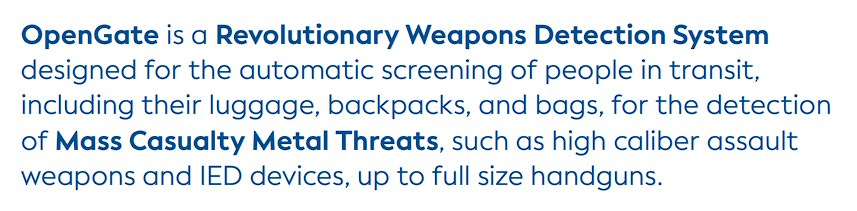
OpenGate is not designed to catch every metal object. That’s not a flaw; it’s a design choice. The system prioritizes speed and reduced false positives, meaning it is calibrated to identify specific thresholds rather than everything made of metal.
A day or so ago, I watched a teacher test one of these detectors with a stapler, held openly in front of them.
It didn’t trigger an alert.
The folks around gave a nervous chuckle. In complete honesty, it was more nervous than chuckle.
I don’t know exactly what that result means, and that uncertainty is the point.
There are a few possibilities. The particular detector may not (or can’t) be calibrated to flag smaller metal objects. It may be calibrated only for items with a mass or configuration above a certain threshold. Or it may be functioning exactly as designed — but without clarity communicated to the people running it.
In any of those cases, the outcome is the same: teachers are asked to operate a system without a shared understanding of what it will and won’t catch.
And this wasn’t a drill or a test run. This was part of the daily screening process implemented in response to a student’s death. Students were being passed through the detector under the assumption — or at least the appearance — of increased safety.
If a visible metal object can pass through without triggering an alert, then what we’re offering isn’t comprehensive prevention. It’s selective detection. And that distinction matters.
When the system’s limitations aren’t clearly defined for the people operating it, what’s being enforced isn’t safety. It’s confidence. Confidence reassures adults. Safety protects students.
In moments like this, visible action carries weight. It signals that something has changed. But without clarity, training, and staffing aligned to the reality of the tools being used, that action risks becoming ritual — a way to say we did something without addressing what the system can actually accomplish.
And once the response is framed in those terms, the next step becomes predictable.
More detectors. Wider coverage. Every middle school. Every high school.
Each step looks like progress. Each step costs money. Each step requires staffing. And none of it alters the underlying equation unless the people running the system are given the time, training, and authority to make it more than appearance.
A student was killed with a knife. The response relies on a screening system that is not designed to identify knives reliably. That mismatch alone should end the conversation. What has followed is not safety work; it is compliance work.
The system is performing reaction, not prevention — executing a visible process that satisfies the need to be seen responding while leaving the core problem untouched, the core risk unchanged.
Note: As reported in multiple outlets, North Forsyth does have metal detectors, but they were not even being used the day of the stabbing.
So Where Does the Money Come From?
Metal detectors cost money. Installing more of them costs more. Staffing them costs even more.
At the same time, districts across the state — including mine — are facing budget shortfalls. Not the abstract kind. The practical kind. Fewer positions. Fewer substitutes. Fewer adults in the building.
Those two realities now coexist: an expanded security response and a shrinking pool of resources.
So the question becomes unavoidable. If additional detectors are deemed necessary, where does the funding come from?
In situations like this, districts often turn outward. Grants. Partnerships. Donations. Community support. Sometimes all of the above. On the surface, that can look like civic strength — a community stepping in to help its schools in a moment of need.
And in many cases, that support is well-intentioned.
But it also introduces complications that are rarely discussed.
Large donations don’t arrive in a vacuum. They come with expectations — not always explicit, but real nonetheless. Expectations about visibility. About access. About results. About reassurance.
And when security measures are funded this way, the pressure to demonstrate effectiveness increases, even if the system’s underlying limitations haven’t changed.
The danger isn’t corruption. It’s distortion.
When funding is tied to visible action, the incentive shifts toward things that can be seen, counted, photographed, and announced. Metal detectors fit that model well. They signal response. They create the appearance of control.
What’s harder to fund — and harder to explain in a press release — are the less visible investments: staffing levels that allow adults to be present in hallways, smaller class sizes that reduce conflict, time for training that goes beyond procedural compliance, and planning periods that don’t disappear when something else needs to be covered.
Those things don’t photograph well. But they matter.
If we aren’t careful, we end up reinforcing the same pattern that follows every tragedy: visible reassurance paired with invisible strain. The system looks stronger from the outside, while the load on the people inside quietly increases.
And once again, the cost isn’t borne evenly.
The expectation to make it work — to absorb the gap between what’s promised and what’s possible — settles on the people already in the building. The ones without budget authority. Without staffing control. Without the authority to redesign the system, they’re being asked to hold together.
That’s not a moral failure. It’s a structural one.
What’s the Solution?
I don’t have a clean solution for violence in schools. Anyone who claims they do is selling something — hardware, software, or false certainty.
What I do have is a clear view from the floor.
I see systems responding to tragedy with urgency but not investment. I see visible measures standing in for structural change. I see confidence being enforced where safety should be engineered. And I see responsibility moving steadily downhill — not because anyone intends harm, but because that’s how the system is built to function under strain.
I can’t fix it by arriving earlier, giving up planning time, or absorbing one more responsibility that wasn’t part of the original job. I can’t fix it by pretending that selective detection is comprehensive protection, or that visible action automatically translates into reduced risk.
What I can do is tell the truth about what this feels like from inside the building.
Doing more with less is not a safety strategy. It’s a coping mechanism — one that relies on elasticity it never replenishes. Over time, it shifts the cost of systemic limits onto individuals who don’t have the authority to redesign the system they’re holding together.
That works for a while. Until it doesn’t.
I don’t want to be doom-and-gloom here and say that schools are going to become increasingly dangerous if we stay on this performative action-reaction course, but I don’t see how they can get safer.
If there’s anything to learn from this moment, it isn’t that we need to pull harder on the same levers. It’s that reassurance and safety are not interchangeable — and treating them as if they are comes with consequences.
For students.
For teachers.
For schools asked to function as something they were never designed to be.
Thanks for reading.
See you in January.
I'm so sorry, Matt. I can't even imagine going through this. And I agree with you that the solutions are smaller classrooms, more resources... and yet we keep going in the opposite direction.
An excellent and tragic assessment.